As Israel faces a new political transition, the possibility of including Arab-led parties in government raises a crucial question: can political participation become a tool for advancing Palestinian rights and building peace? The article examines the challenges and opportunities of this political moment, arguing that meaningful inclusion must translate into concrete changes on the ground, from civilian protection and reconstruction to local governance and a credible political horizon.
Who will get a say in the new government?
Israel’s president Isaac Herzog announced on Saturday he has asked Gadi Eisenkot to form the next government. Backed by parties representing 67 lawmakers, Eisenkot now has 28 days to forge a government among factions deeply divided over military policy, Palestinian rights, and Arab political participation. For Palestinians, the significance of this opportunity depends on whether these negotiations make room for their concerns and lead to decisions to address the dangers they face.
Leading a Zionist opposition bloc with 48 seats in Parliament, Eisenkot depends on outside support. That requires agreement beyond the shared goal of ousting Netanyahu and his far-right coalition. Yair Golan’s Democrats oppose annexation and include supporters of a negotiated Palestinian state. Lieberman’s Yisrael Beytenu has been explicit about rejecting Arab support and favors a compromise on military conscription to bring ultra-Orthodox parties on board. Naftali Bennett and Yair Lapid’s Beyachad have also campaigned against depending on Arab parties. Eisenkot has himself set conditions for cabinet membership that, according to him, no Arab party met.
Arab-led parties have their own proposals. Mansour Abbas’s Ra’am (or United Arab List) considers joining the government, having previously participated in Lapid and Bennett’s government in 2022. The Joint List favors support from outside the cabinet. Its leader, Yousef Jabareen, calls for action against organized crime in Arab communities in Israel, adequate municipal funding, and renewed talks with the Palestinian leadership. Holding 19 seats, Ra’am and the Joint List together command significant bargaining power. The negotiations will be a test: what outcomes can political inclusion bring? This could mean giving Arab representatives a say over law enforcement budgets, military decisions and foreign policy. Moreover, their support could depend on commitments to protect Palestinian communities and allow aid and reconstruction to proceed.
Keeping his cards close, Eisenkot has vowed to ensure his mandate “leads to the formation of a national emergency government,” which, according to him, “will require creative and unconventional political measures.” His path to forming a government remains uncertain.
The real test
The far right has used the October 7th attacks to legitimize dehumanizing rhetoric against Palestinians. An urgent reason to pursue this partnership is to unseat key ministers whose rhetoric was turned into a concrete political project. Finance Minister Bezalel Smotrich has advanced plans to annex West Bank territory. He and National Security Minister Itamar Ben-Gvir encourage the plan to expel Palestinians from Gaza and call for Jewish settlements in the Strip. Removing them and others with similar views means taking ministerial powers out of their hands. The next government’s decisions will determine whether this change is able to reach people living under occupation, who are facing routine disruption and violence.
The latest reports show the escalating severity of the situation. OCHA’s 29 October report recorded 397 settler attacks causing casualties or property damage between 1 and 26 October. UNICEF’s update, dated 16 October, reported a daily average of 17 people displaced by demolitions, settler violence and related access restrictions across the West Bank, including East Jerusalem, in 2026 so far. It also highlighted ongoing shelter needs among more than 34,000 people, including 12,000 children, uprooted from northern refugee camps by military operations. Access to education, medical treatment, and other essential services remains restricted.
An incoming cabinet would be tested on its ability to mitigate settler violence, provide safer access to farmland and prevent further displacement. Accountability and commitment would require that ministers ensure that security forces intervene during attacks, investigate those responsible and protect families trying to reach their land.
In Gaza, disagreement is foreseeable. Eisenkot vowed to end Hamas rule within 18 months of taking office, claiming “this will happen, whether through action based on President (Donald) Trump’s framework, which was accepted by the Netanyahu government, or through the deployment of military and operational capabilities – resourceful and creative”.
OCHA’s 29 October report documented repeated Israeli strikes and gunfire reportedly causing civilian casualties. Citing Gaza’s Ministry of Health, it reported a total of 1,559 fatalities and 5,608 people injured since the ceasefire agreement in October 2025. Near the “Yellow Line”, reported shootings and arson have driven further displacement. Families are facing high risks of winter flooding amid inadequate shelter, food, water and sanitation. Communicable diseases, such as acute respiratory infections and skin diseases, persist in the territory. Protection and security must therefore address both immediate violence and life-threatening conditions after displacement.
Washington’s efforts to advance the Gaza Plan are confirmed by Tony Blair’s November talks in Israel. Prior to the elections, Trump had given his full endorsement to Netanyahu, who has been pushing to resume fighting Iran. An Eisenkot government could give Gaza Phase II of Trump’s Gaza Plan new momentum and fresh diplomatic backing. Alongside UN Security Council Resolution 2803 and the New York Declaration, these proposals and resolutions address Gaza’s transition and future Palestinian sovereignty. They offer paths that link reconstruction and Palestinian governance with Hamas disarmament, arrangements for Israeli withdrawal, and security guarantees. It is unclear how that can be implemented amid the deadlock over Hamas’s demilitarization and Israel’s sustained operations inside Gaza.
Small steps for lasting peace
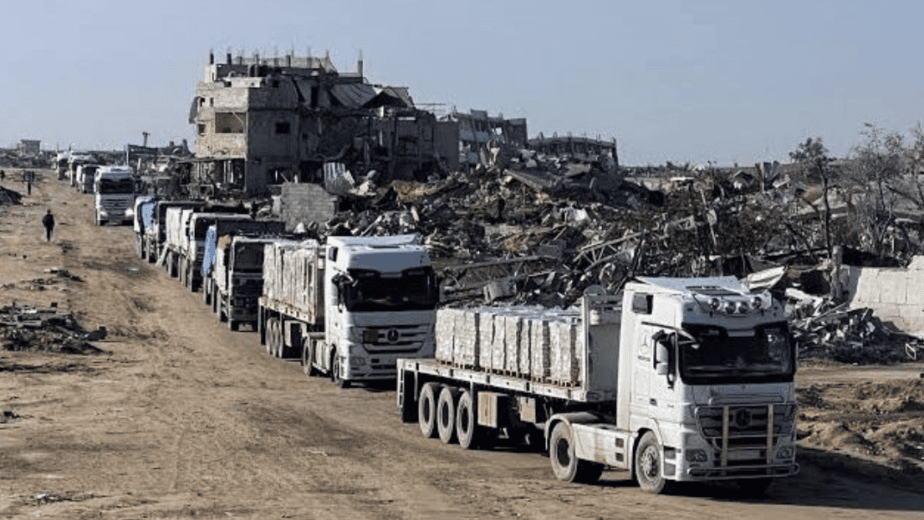
Gaza’s recovery and reconstruction are estimated to cost $71.4 billion, with around 68 million tonnes of rubble to clear and nearly 1.9 million people displaced, according to an April 2026 assessment by the World Bank, EU and UN. However, reconstruction is not an end in itself. It is inseparable from the survival and rebuilding of Palestinian institutions in the West Bank, weakened by heavy restrictions, violence and displacement. Palestinians need to have a say and be a part of the decisions concerning their communities. This requires both functioning local governance and civilian protection as foundations for long-lasting peace. Cooperation on humanitarian aid and essential services can start rebuilding trust and providing stability while wider negotiations advance. Regional and international partners have a crucial role in supporting both efforts.
A new Israeli government is unlikely to fundamentally change the Israeli-Palestinian status quo in the short term. Although the occupation won’t cease to exist overnight, nor will deep-rooted grievances be resolved any time soon, concrete advancements should remain a priority. Political inclusion could create more room to protect Palestinian rights and begin challenging the narratives and, most importantly, the policies that deepen division and injustice.
A political horizon is more credible when diplomacy can improve daily life: when people can remain on their land, live safely, find economic stability and influence their own future. A peace process cannot rely on rhetoric alone. It must start with tangible shifts and show that broader participation can deliver real change on the ground.
About the author: Victor Palatnik Krutman
Victor Palatnik Krutman is a Brazilian journalist and international relations master’s student with over seven years of experience in journalism and documentary filmmaking, including four years reporting from Israel and Palestine. His work has covered conflict, politics, and human rights for international media outlets, alongside grassroots engagement civil society organisations. Currently pursuing a master’s degree in International Relations at the University of Bologna, he focuses on conflict analysis, peacebuilding, and international cooperation. At the Agency for Peacebuilding, he contributes to research, programme development, and communications, supporting initiatives on dialogue, youth participation, and international cooperation.